
We’re heading into another holiday season where shoppers have more ways to find and compare products, check prices, and decide what to buy. Google still matters. Paid search still matters. But AI is increasingly part of the process, helping people figure out what they want before they ever land on a retailer’s website.
For brands, that creates a different challenge. It’s not just about getting someone to click. It’s about making sure your products are part of the conversation in the first place.
We’re seeing signs of that shift across all of our clients, and the broader shopping data gives us a good reason to pay attention heading into Black Friday and Cyber Monday.
What the Data Shows: AI Search Growth Indicators
In our October review of 79 comparable client domains, we saw some significant year-over-year increases across AI search experiences. Inclusions across ChatGPT, Gemini and Google AI Overviews rose 290%, from 42,794 in October 2025 to 166,896 in October 2026.
There’s an important distinction here: These are AI inclusions, not actual website visits, orders, or revenue.
The next question is where those appearances are happening. Showing up for a broad informational question is different from showing up when someone is comparing products or deciding what to buy. Both can matter, but they serve different purposes.
For an ecommerce brand, I’d rather know whether we’re showing up for the questions that help someone make a purchase than simply reporting a larger number of AI mentions.
Why the Traffic Is Worth Watching Too
Adobe’s September 2026 retail data adds another piece to the picture. AI referrals to U.S. retail sites grew 71% year over year. Those visitors also converted at a 90% higher rate and generated 83% more revenue per visit than non-AI traffic in Adobe’s analysis. Read Adobe’s findings.
That doesn’t mean AI automatically produces better customers. But it suggests that some shoppers are doing a meaningful amount of research before they click through.
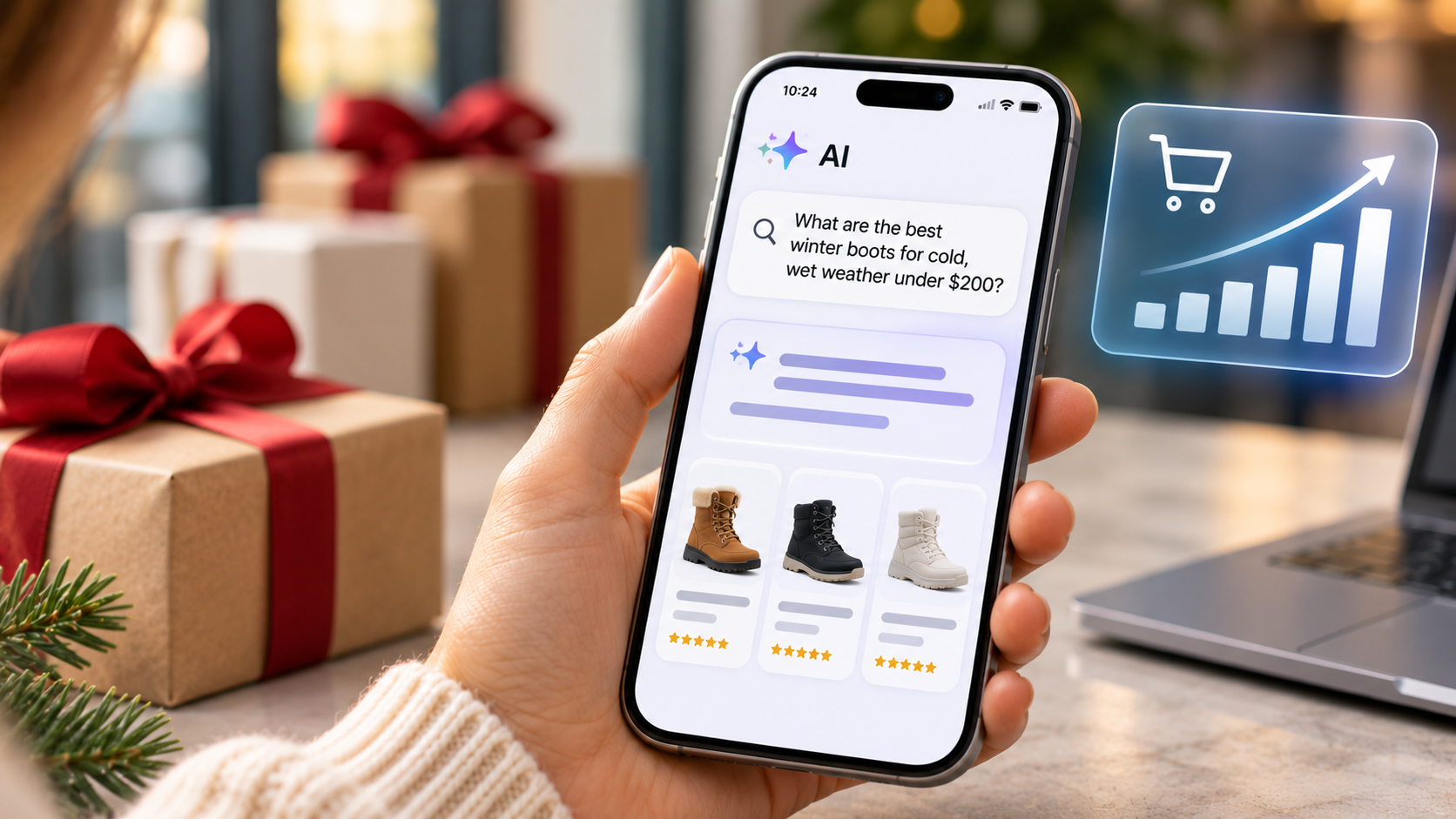
Think about the difference between someone searching for “winter boots” and someone asking which waterproof winter boots are best for walking a dog in New England under $200. The second person is already working through fit, use, and budget. If your product makes that shortlist, the visit that follows may be much closer to a buying decision.
47% of those surveyed said they had used AI to help make a purchase decision.
2026 AI and Search Behavior Study
Get More AI Search Insights
Explore the 2026 AI and Search Behavior Study.
That lines up with what we found in our own research. In our AI and Search Behavior Study, 47% of those surveyed said they had used AI to help make a purchase decision. Among those shoppers, finding prices, comparing products, and summarizing reviews were common uses.
This isn’t a reason to move away from SEO. It’s a reason to make sure your SEO strategy accounts for how people are searching now.
What It Could Mean for the Holidays
The last holiday season gives us some context. Adobe reported 693.4% year-over-year growth in AI referrals to retail sites during November and December 2025. For 2026, Adobe forecasts AI referral growth of 95% on Black Friday and 88% on Cyber Monday.
Is Your Site GEO/AIO-Ready for Cyber Week?
My expectation is that more shoppers will use AI to narrow their options before visiting a store’s website.
That matters because the consideration set can form before someone searches for your brand. If your products aren’t included, a competitor may already have an advantage by the time that shopper reaches Google, a marketplace, or a retailer’s site.
It also means we shouldn’t judge AI’s role only by referral traffic. Some shoppers will discover a product in an AI answer, and then search for the brand or return directly later. The influence and the attributed visit won’t always look the same.
Where I’d Focus GEO/AIO Efforts Before Black Friday
At this point in the season, I’d focus on making the information you already have more useful and more consistent.
1. Give shoppers enough detail to choose. Product pages should answer the questions people ask when comparing options. How does it fit? What is it compatible with? What’s included? Who is it best for? What makes it different from the next product?
A generic description doesn’t do much to help a shopper make that decision. Our guide to improving product page GEO covers ways to make those pages more useful for shoppers and AI tools.
2. Get your feeds and landing pages in sync. Titles, attributes, prices and availability should be accurate and consistent. As promotions change, make sure the sale price a shopper sees matches what they find when they arrive. Shipping details and inventory deserve the same attention.
These aren’t flashy changes, but they support both discovery and conversion. We cover more of that preparation in our holiday PPC strategy guide.
3. Look beyond the referral report. Track AI-referred visits, orders and revenue. Also look at which questions bring up your brand, which competitors appear alongside it, and what’s happening with branded search and organic performance.
As I discussed in Why Zero-Click Is Getting Worse, a search can influence a customer without producing an immediate click. That doesn’t make traffic irrelevant. It means traffic alone doesn’t tell the whole story.
The Bottom Line
More AI visibility is useful only if it helps the business.
AI shopping is growing, but the goal hasn’t changed. We want to help the right customers find the right products and transform that interest into profitable growth.
For this holiday season, that means keeping the channels that already work strong while making sure your products can be found, understood, and recommended in AI-driven search.
More mentions are encouraging. More qualified visits and revenue are what we’re working toward.
Wondering if your products are showing up when holiday shoppers turn to AI for recommendations? We can help identify gaps in your visibility and strengthen your SEO and GEO strategy to drive more qualified traffic and sales. Contact us through the form below, or connect with us on LinkedIn to start the conversation.