


The outdoor industry is crowded with big brands and high-recognition names. Forging an online presence as a small or mid-sized brand requires digging deep. If you’re stretched thin, you might overlook content marketing altogether or rely on AI to do it for you—and either can impact your visibility, especially when optimizations aren’t on point.
“Online visibility” today refers to more than showing up in traditional search. Outdoor brands must also reach people searching with generative AI tools. That’s why effective digital marketing requires both search engine optimization (SEO) and generative engine optimization (GEO).
The best SEO (and GEO) tips for outdoor brands are to leverage seasonality and local factors, create targeted and valuable content, and do it all authentically. The stakes are too high to call your content marketing “good enough.” Our advice will help you establish an online presence that search engines, generative AI tools, and customers notice.
Why SEO and GEO Matter
Outdoor adventurers may relish taking the long way or enjoy the journey for what it is, but they rarely take the same approach to finding gear or guides online. If your brand doesn’t appear near the top of the search engine results pages (SERPs), in AI overviews, or in ChatGPT citations, it’s time to optimize your site. Here’s what search engine optimization can do for outdoor brands like yours:
- Increase visibility in the SERPs
- Attract qualified, high-intent traffic
- Establish your company as an authority in the space
- Grow a sustainable marketing channel that builds momentum long-term
- Help generative search engines find content to cite in recommendations or answers
AI and Outdoor Brands
Let’s talk about the smoke we can’t ignore: using AI for content. We realize generative writing tools are attractive options for an outdoor brand without a large marketing team or for a company more experienced in the woods than at a writing desk. But remember that AI is a tool with a limited knowledge space.
Relying on “artificial intelligence” to share real-world experiences isn’t the best way to come across as authentic. AI generates text by predicting the next likely word, which makes its content feel expected and generic (spoiler: it largely is). Here’s what ChatGPT said when I asked it why it is likely to repeat itself:
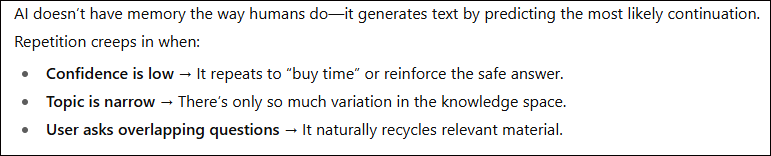
Consider this food for thought anytime you feel tempted to delegate content to your go-to bot, and use these optimization tips to make your content marketing worth the (human) effort.
Push the Bounds of Optimizations
Hikers, anglers, and other outdoor consumers rely on their gear through perilous, intense, and amazing experiences. They need to trust a brand before they choose to take its equipment into the woods or out on the ocean. The problem is that too many outdoor brands try to earn this trust the wrong way.
A lifestyle company’s SEO strategy can’t only focus on basic optimizations. It must build relationships, supply beyond-surface-level information, and lead customers from discovery to loyalty. How? Outdoor industry content marketing and SEO must align to demand attention and build trust—aka, dominate search. Here are a few AI-free hacks to optimize your content under a time crunch:
- Write for retrieval using bulleted lists and short, clear sentences.
- Template your structure from problem to proof rather than wasting time reinventing.
- Keep a note in front of you to remind you of the audience, intent, key terms, and tone so your content stays aligned, even when rushed.
- Name the obvious (definitions, clarifying sentences) to help snippet eligibility and search retrieval, plus give your content breadth.
- Remove fluff and filler so you have less to write and your content is search-engine ready.
Create Authentic Content
Google rewards authenticity. Its Helpful Content requirements specifically emphasize first-hand knowledge. Marketers can and should write to stand out from AI, rather than using it to join the fray. It’s a mistake for outdoor brands to use AI content wholesale because it lacks the personalized insights that Google favors.
You’d be much better off having your team’s resident experts contribute insider tips, cheat sheets, honest pros and cons, mistakes made, and lessons learned to bolster your online content—or lean on an agency with a multidisciplinary team. For example, Jeremiah would happily walk your readers through the best attractor nymphs for fly fishing, and Courtney’s experience with all things kayaking will have your audience up to speed in no time.
Optimize for Gear + Season or Destination
Just because the buying cycles for recreational activities are seasonal doesn’t mean those topics aren’t worth your time optimizing for. The exact opposite is true. You’ll have limited time to catch shoppers’ attention, so your content had better quickly direct them to relevant items. And stuffing your site with city names won’t quite do it.
The difference in SEO content for outdoor brands is that they must also optimize for environments—such as the Pacific Northwest, high-altitude trails, and desert backpacking—in addition to seasons and cities. Locations and their semantic equivalents better connect searchers’ adventure goals to your gear, and they help move the needle with generative search for outdoor brands, which relies on context.
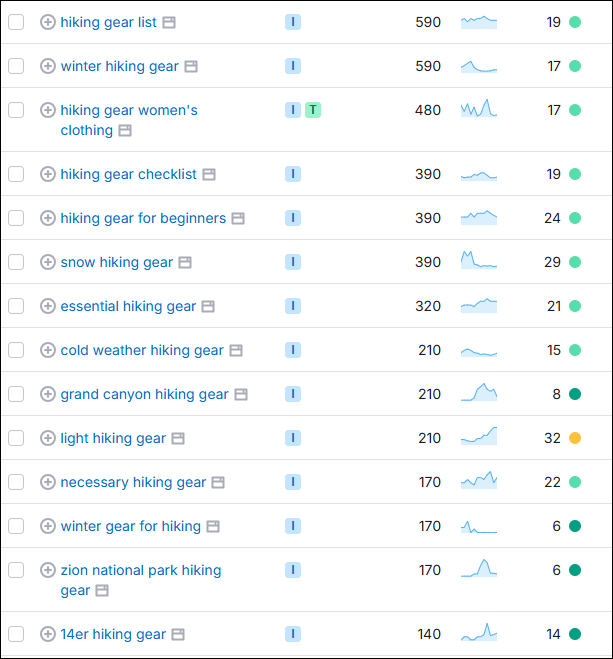
When optimizing, I look for multi-word phrases that include specific gear and the destination or goal, such as “hiking a fourteener” or “shoes for muddy alpine trails.”
The image below shows the vast keyword options for seasonal and destination-based searches. The easy keyword targeting and promising search volume can give your content a leg up in reaching shoppers with specific gear needs who are ready to convert.
Embrace Generative Engine Optimization
The good news for outdoor brands is that generative search engines—ChatGPT, Perplexity AI, Google’s AI Mode—don’t require an entirely new marketing strategy to earn citations. If you’re following SEO best practices, your content marketing is 95% of the way optimized for AI-powered search tools (if you’re being honest about how well you follow best practices).
The most important change in an outdoor brand’s SEO strategy for generative search success is to add focus on user intent by providing contextual cues, semantic search terms, and clear definitions and answers. The results shown below are a ChatGPT response to a prompt about the “best hiking gear for beginners.” Searches like this are exactly where an outdoor brand wants its content or products to show up.
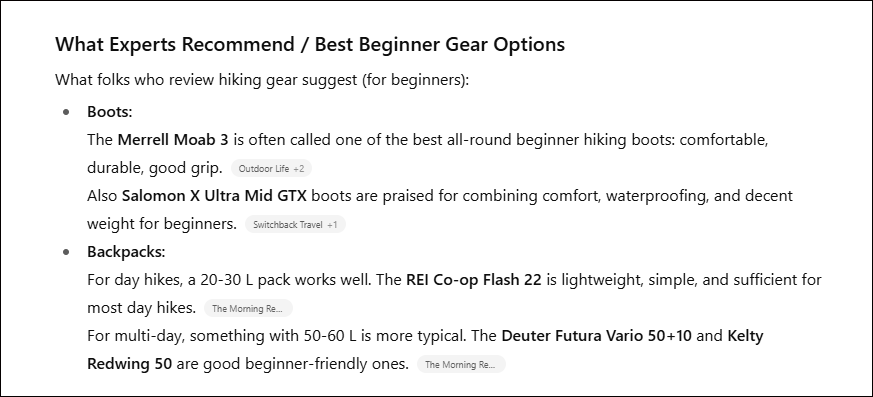
The Morning Review appears in the GPT results below twice. Why? Here’s what that article did:
- Specifically targeted “beginning hiking gear”
- Was written with authority: It’s obvious the author knows the space and the specifics
- Answered frequently asked questions with concise, unbiased tips
- The page is dated, signaling it is relevant and current
Target Long-Tail Queries
We’re seeing firsthand how AI-powered engines are changing people’s search habits. Queries are becoming longer and more specific. Here’s a sample of long-tail keywords currently ranking in Semrush:
- How to compare outdoor gear across brands before buying
- Best quality outdoor gear for backpacking
- Best outdoor equipment for mountain hiking
- What three items would you make sure to bring hiking
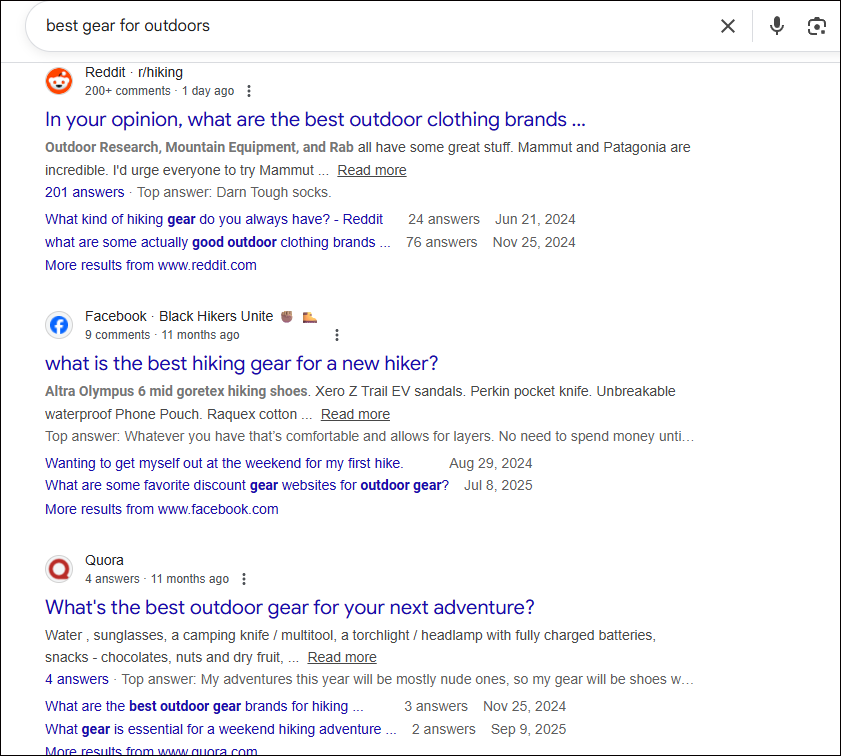
Need ideas for long-tail topics? Hit the forums. Reddit and other discussion groups are gold mines of potential long-tail queries and article ideas. Take the snapshot below as an example. A quick search for discussions on “best gear for outdoors” gave me several solid starting points for content about the best brands, the best gear for a new hiker, and essential gear for a weekend hiking adventure—and I hadn’t even scrolled yet.
Developing content around real topics introduced by real people is one way a smaller brand can use SEO to compete against major retailers. Not only will the lesser-known brand forge a deeper connection with customers by joining a relevant conversation, but the content will show searchers that you’re a trustworthy resource on their interests.
Build Your Local Brand
A Google Business Profile is essential for local visibility, but optimizing for regional terms is about more than appearing on Maps. You know the trails, rivers, and landmarks as well as anyone else, so use those regional insights to make hiking guides, gear checklists, and place-based content.
If you partner with paddle clubs or climbing gyms, or sponsor area conservancies, sharing updates and events on your Google Business Profile, social channels, and blogs can generate valuable backlinks and PR that can boost your credibility. Another bonus? PR goes a long way to increase citations in generative search for outdoor brands.
Ditch Copycat Content
As Google promised, searchers are now seeing 45% less low-quality, unoriginal content. If your site is filled with duplicate, competing content, or your marketing strategy is bandwagon-esque, your rankings and citations likely show it.
While I understand that the rhetorical bridge-jumping question—If all your friends jumped, would you?—may not hit as hard for a crowd of actual cliff-diving thrill-seekers, it’s still worth mentioning: The “bandwagon” mentality has no place in your content strategy. Surface-level listicles, how-tos, and clickbait won’t cut it. This doesn’t mean you can’t promote your gear or recommend day packs and dry bags. You just have to do it better than basic lists and top 10s. Put a creative spin on old formats by publishing:
- Lists as videos or other engaging media
- Comparison grids and tables
- Printable, interactive checklists
- Advertorials using firsthand knowledge and experience
Optimize Landing Pages
New prospects often need context to appreciate your product recommendations, even if it lengthens the buying experience. Don’t assume every visitor will research your About Us page to learn what makes your brand different. Consider optimizing landing pages for specific customer segments or activities to quickly warm up cold audiences and improve conversions.
Make Technical Optimizations for Outdoor Brands
AI discovery, mobile shoppers, and multimedia content require solid website performance. Technical SEO for outdoor brands should facilitate the loading, crawling, and signaling that SEO, GEO, and human users rely on. Remember that image optimization usually matters more for outdoor brands than most, and descriptive alt text that references the environment helps AI systems understand the page’s purpose.
Use AI Smartly
Wait, use AI? Yes, go ahead and use it, but do so intentionally and carefully. Authenticity is one of the most important aspects of an outdoor brand and AI shouldn’t be trusted to maintain an authentic voice or credibility. It could miss a subtle but critical detail (like recommending cotton socks for hiking), resulting in a catastrophic loss of trust in a brand. Nevertheless, AI can help a small outdoor brand do more with minimal resources by expediting tasks such as:
- Audience personas and data mining
- Content ideation
- Workflows for SEO content (prioritize oversight!)
- Outlines and first drafts, ready for your personal touches
- Inventory management
Outdoor brands won’t win visibility with shortcuts. Optimizing for real customers using real experience is key. If your team is short on time or resources, let Eight Oh Two help. We offer services and solutions for optimized, authentic content that helps brands like yours succeed. Contact us today.