


If you’re concerned about your cost per click right now, you’re not alone: Advertisers across different verticals are noticing their CPCs creeping up before their eyes this year. For those with smaller budgets, it may feel like you’re getting priced out of paid search altogether. With the right adjustments to your Google Ads bid strategy and targeting, you can stay competitive without burning through your budget.
The traditional answer to keeping your cost per click in check has been manual bidding. Although Google highly recommends smart bidding to reach the most relevant queries at the best times, manual bidding is still an option for some campaigns. You’ll give up the real-time signals and automation that make smart bidding worth using, and take on more work in the process. Using these strategies, you can get the most out of smart bidding while avoiding overpriced traffic.
Get Ahead of Your Google Ads Spend
Prevention is the best cure. Before you launch any new keywords, use tools like the Google Keyword Planner or SpyFu to compare prices and decide ahead of time if you can avoid more expensive terms, saving you a headache later. For a more in-depth look at keyword planning, check out my keyword research step-by-step guide. For existing campaigns, there are multiple options to cut traffic costs.
Trim Your Queries
One of the best tools in your arsenal to fight rising CPCs is consistent, aggressive query funneling by negating expensive or less relevant queries. This is especially useful if you use broad match keywords in your search campaigns that rack up spend quickly without you noticing if Google starts matching you to expensive competitor terms. This method’s biggest drawback is the time it necessitates, but if you cut out high-cost and unnecessary queries early and often, you can save a lot of budget for the terms you actually want to show for. The best part is that this strategy applies to almost all campaigns. Any campaign that can use negative keywords can benefit from monitoring and funneling traffic.
Narrow Your Targets
There are a few other ways to reduce your CPCs by narrowing your campaign’s scope. Just like with search terms, the wider your targeting, the more chances there are to pick up less relevant or overpriced traffic. For search campaigns, limiting your keywords is an obvious choice — keep only your highest-intent, best-performing keywords, or narrow your broad-match keywords to phrase or exact if they’re matching irrelevant queries. You can also test targeting only your most efficient products or limiting your ad placements where possible.
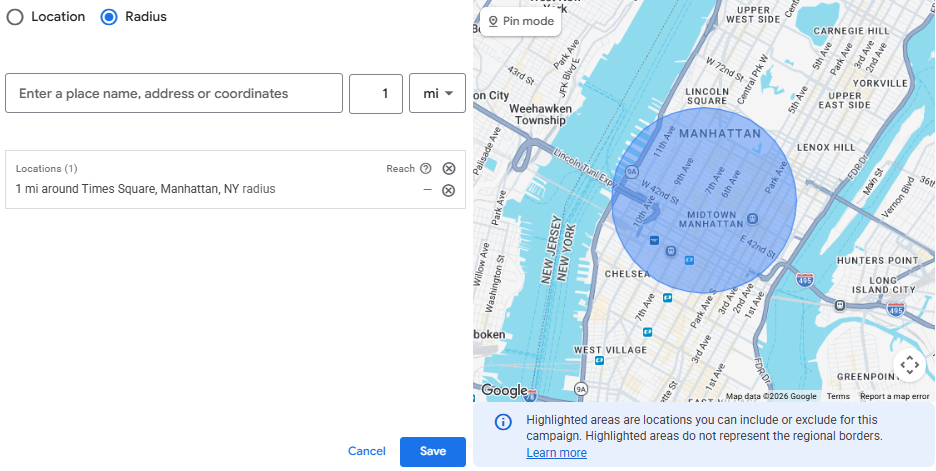
One of the best ways to narrow your targeting on any campaign is to limit your geo-targets. High-population centers are a frequent source of wasted spend. It’s not uncommon for California, New York, and Texas to draw a large portion of your budget with a high CPA. If your budget is limited, test advertising to only a few of your best-performing locations. This is especially helpful if your account is highly seasonal (i.e., you might not want to send winter coat ads to Florida in the middle of the summer). The size of the area you wish to target or exclude is as granular as your imagination allows.
Target Impression Share
What if you have a branded-search campaign with an increasing CPC and you can’t change your keywords or your geo-targeting? Switching from a conversion-based bid strategy to a target impression share bid strategy might be your best move. It can reduce your cost per click while increasing your impression share by targeting a larger volume of impressions Google’s algorithm has deemed less desirable. This strategy works especially well for branded search because the high-intent searches build a natural efficiency cushion.
Expand Your Ad Types
Although we’ve mostly focused on search campaigns so far, your campaign type has a huge impact on traffic cost, and search is often one of the most expensive campaigns. Campaigns with more placement variations like Performance Max (pMax) and Demand Gen typically have a lower cost per click and often have a much lower CPM compared to Search.
While e-commerce retailers are often already using pMax for its shopping placements, B2B and lead gen advertisers can also use pMax to achieve their goals. Because of pMax’s combined search, display, and video placements, you can advertise across the funnel. pMax isn’t a “set it and forget it” solution, but you can mold it to achieve different goals with careful targeting and channel monitoring.
In particular, B2B advertisers can use Demand Gen to target Gmail inboxes exclusively, giving them a low-cost awareness outlet with premium placements and avoiding the headache of funneling through thousands of low-quality display placements.
The Best Of Both Worlds
We have one more trick up our sleeve, however, that Google hasn’t advertised as openly. If you want to use a smart bidding strategy like target ROAS to prioritize efficiency while controlling cost per click, you won’t have this choice in campaign settings. However, you do have the option if you use a portfolio bid strategy. Portfolio bid strategies are typically used to consolidate bidding across several campaigns, but they can be applied to a single campaign as well. That distinction matters here: it lets you set a target ROAS and a maximum CPC limit at the same time.
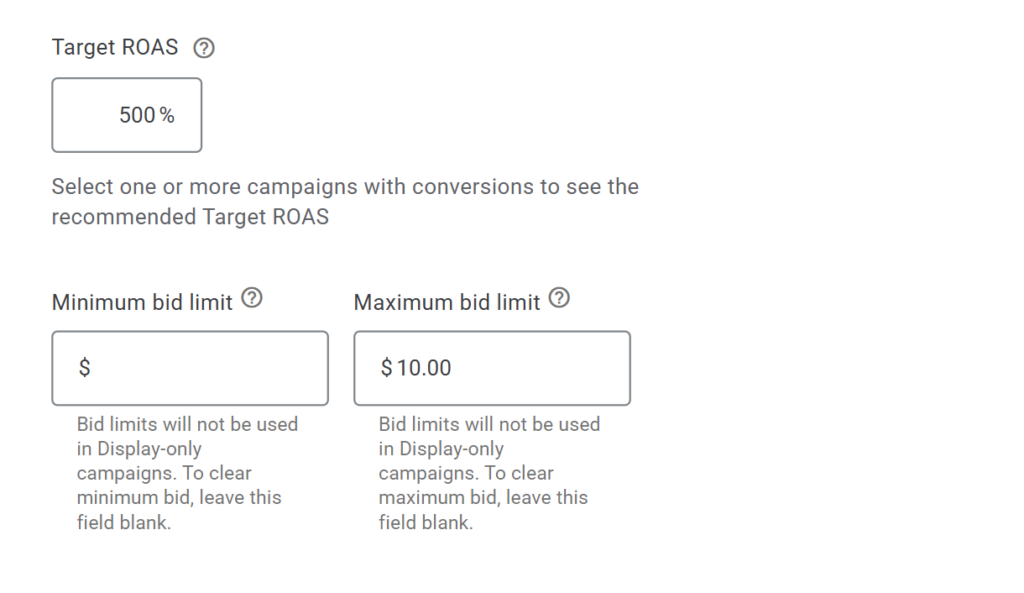
However, you have to be careful with this strategy and make sure your goals are reasonable. The “smart” in smart bidding is from Google’s ability to apply the right bid at the right time based on user signals. Higher-intent queries are more expensive because competitors with higher budgets and looser targets are willing to pay more. Your maximum CPC limit might lock you out of the best auctions if you’re too conservative.
To get the best performance out of a portfolio bid strategy with a bid limit, only apply this strategy to an existing campaign that’s pulling in unreasonably high CPCs, and which you are 100% confident needs to reduce traffic cost (consider your goals, budget limits, current CPA/ROAS, and margins on your conversions before setting a bid limit). Keep in mind that some campaigns also cannot use a portfolio bid strategy — pMax isn’t able to, but search and standard shopping can. Having at least a few weeks of performance without a limit is best; this gives you enough data to determine what queries typically cost and where your ideal balance of efficiency and volume is.
Which Campaign Types Can Use Portfolio Bidding?
| Campaign Type | Search (including AI Max) | Standard Shopping | PerformanceMax | Demand Gen | Display & YouTube |
| Can use Portfolio Bidding | ✓ | ✓ | 𐄂 | 𐄂 | 𐄂 |
Finally, it’s crucial to monitor this strategy closely to make sure you aren’t excluded from important auctions. Google will automatically flag your campaign if your max CPC is limiting your visibility, but it’s best to decide yourself based on your impression share, conversion volume, and efficiency over time. Test incrementally higher bid limits if you’re falling behind, and remember that this strategy doesn’t work for every campaign.
Whichever strategy you choose, traffic efficiency will always be something you need to manage. A portfolio bid strategy or narrowed geo-target can cut down costs, but to make the most of it, you’ll still need to keep an eye on your search queries and placements to make sure expensive traffic doesn’t start leaking in and that you aren’t getting priced out of the converting auctions.
Ready to boost the efficiency of your Google Ads budget in 2027? Reach out to us through our contact form below or connect with us on LinkedIn to get the conversation started.