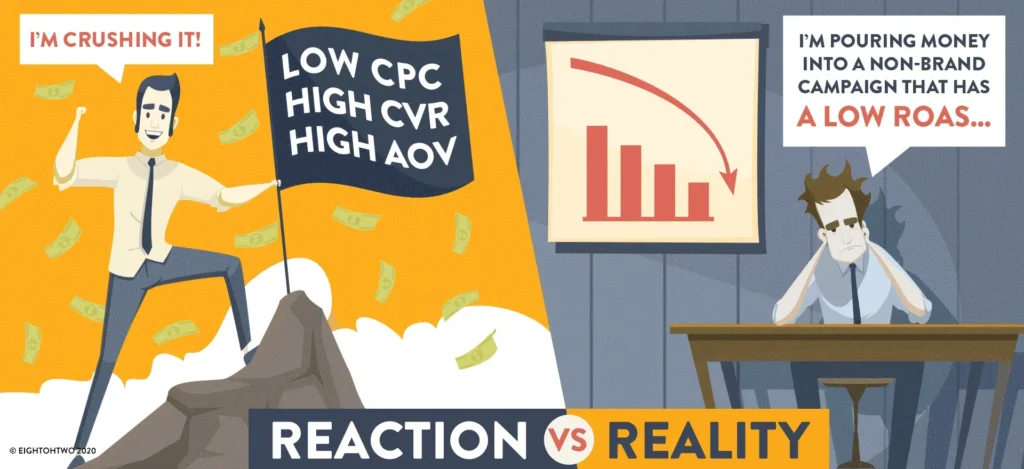

Hotels pay for multiple ad clicks from the same traveler, even though they only got one reservation. If you aren’t looking for it, you could be overpaying more than you realize. Every duplicate click lowers your hotel’s margins and increases your cost-per-acquisition. Meanwhile, online travel agencies (OTAs) keep bidding on your brand.
Many hoteliers will add channels to try to fix this, and that isn’t always the best option. Instead, understand what each channel is supposed to do and measure these against a single source of truth (usually the booking engine) to optimize spend where it increases bottom-line revenue.
How Double-Paid Bookings Actually Happen
Double-paid bookings occur in scenarios like this: A traveler searches for your hotel by name, clicks your paid search ad, gets distracted, and exits. Days later, the same traveler searches again, sees your Google Hotel Ad, and books through that ad. Your paid search campaign reports a click; your Hotel Ad campaign reports a booking. Both attribution models take credit for the reservation, so you pay both for one conversion.
What are the Different Ad Channels?
Paid Search: Text Ads on Google and Bing
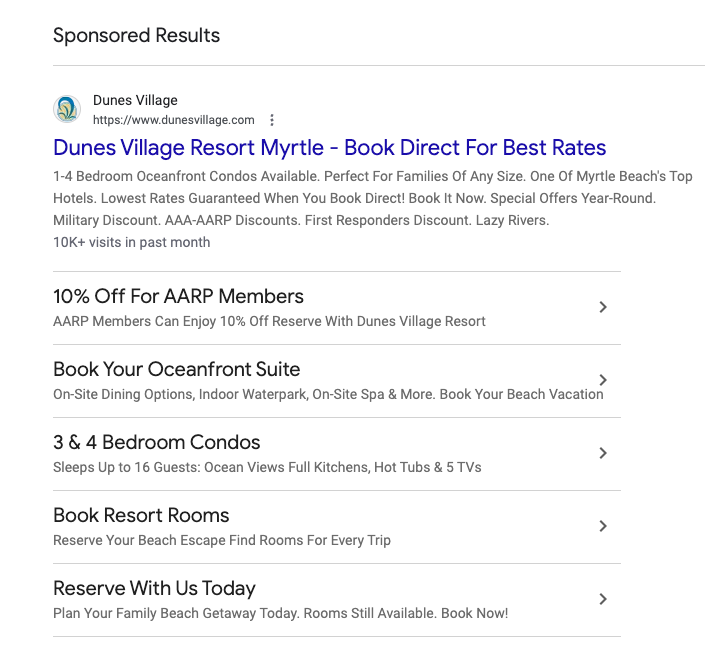
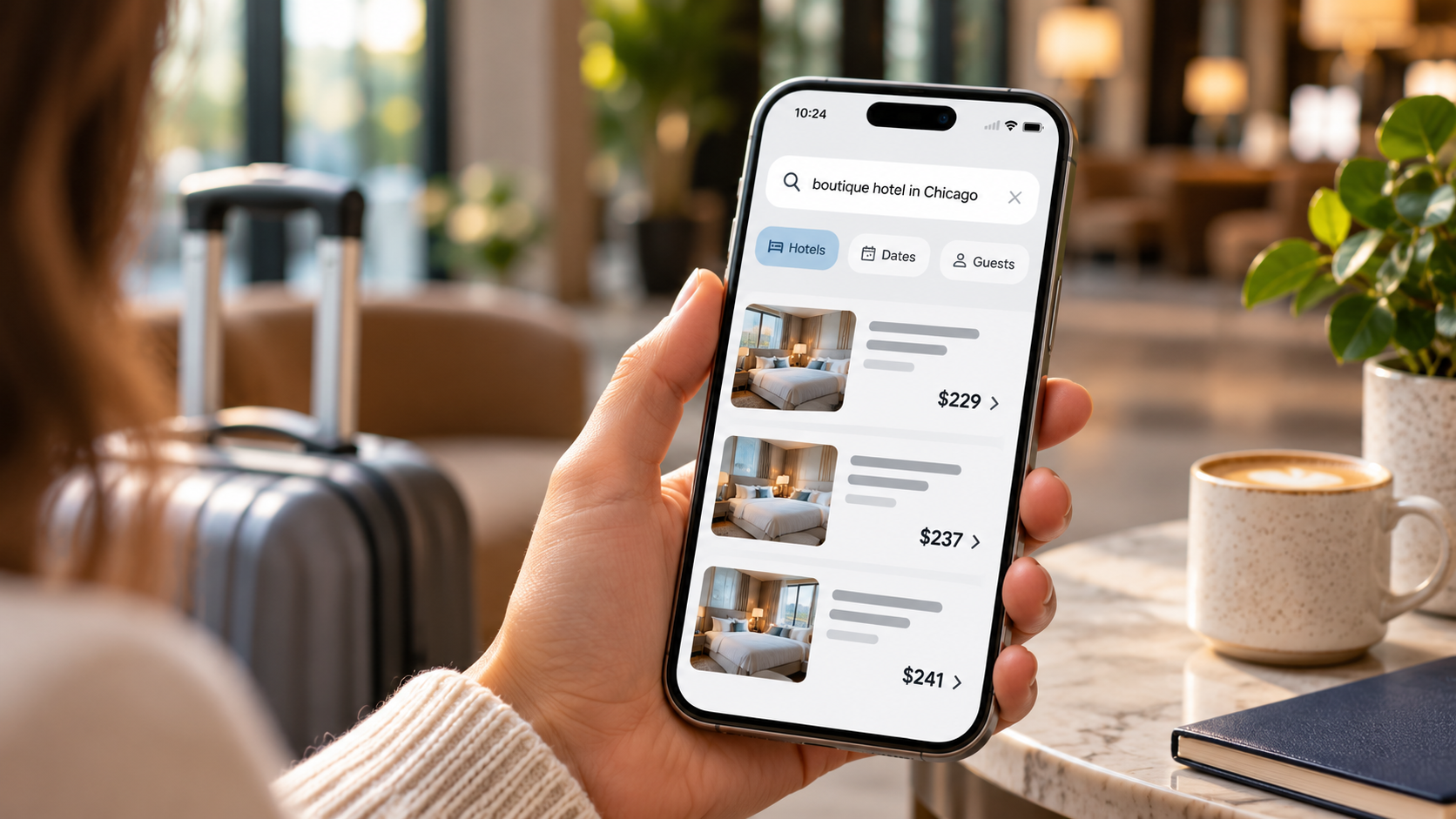
Paid search ads run at the top of the results page when someone searches a keyword you’re bidding on. Hotels pay each time someone clicks an ad, using a Pay-Per-Click (PPC) system. To set these up, you’ll select strategic keywords and write ad copy to match the dedicated landing page that the user will be directed to after clicking.
Hotels should plan to run different variations of paid search ads:
- Brand – Ads target the hotel’s name
- Non-brand – Ad terms match the hotel’s descriptions, amenities, and offerings, such as “boutique hotel in Chicago”
- Event – Ads targeting weddings, corporate retreats, family reunions, and other events based on the hotel’s offerings
Hotel Ads: Price-Led Placements on Google
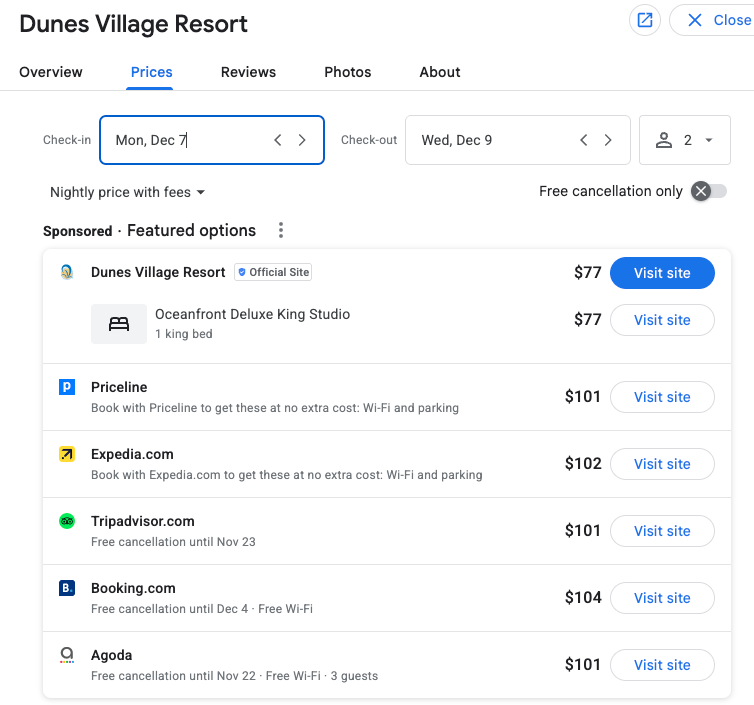
Google Hotel Ads show your hotel’s rates and availability directly in Search and Maps, and use a PPC system. These show hotel rates from the booking engine, so visitors can see a live price before clicking on the ad.
Metasearch: Rate Comparison Sites
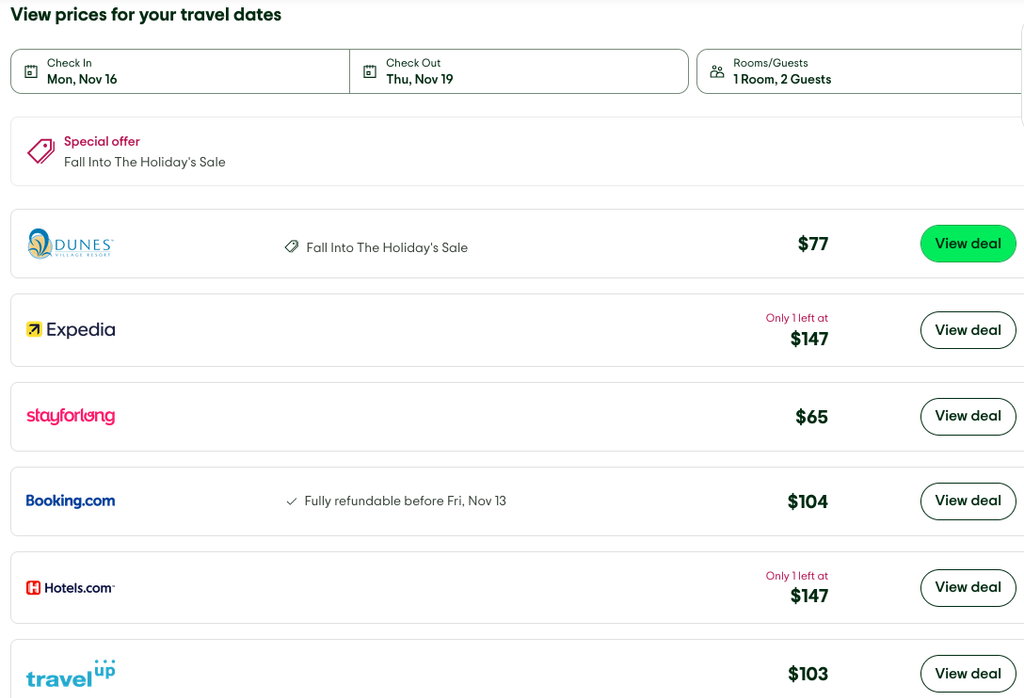
Metasearch platforms aggregate and compare hotel rates from multiple booking sources, including OTAs, such as TripAdvisor, Trivago, or Kayak, and hotel websites. These ads can run on either a Pay-Per-Click or commission structure.
Where We See Ads Overlap
Search, Hotel, and Metasearch ads do not run in separate lanes. They compete for the same traveler, often on the same results page.
Brand Queries: Three Placements, One Search
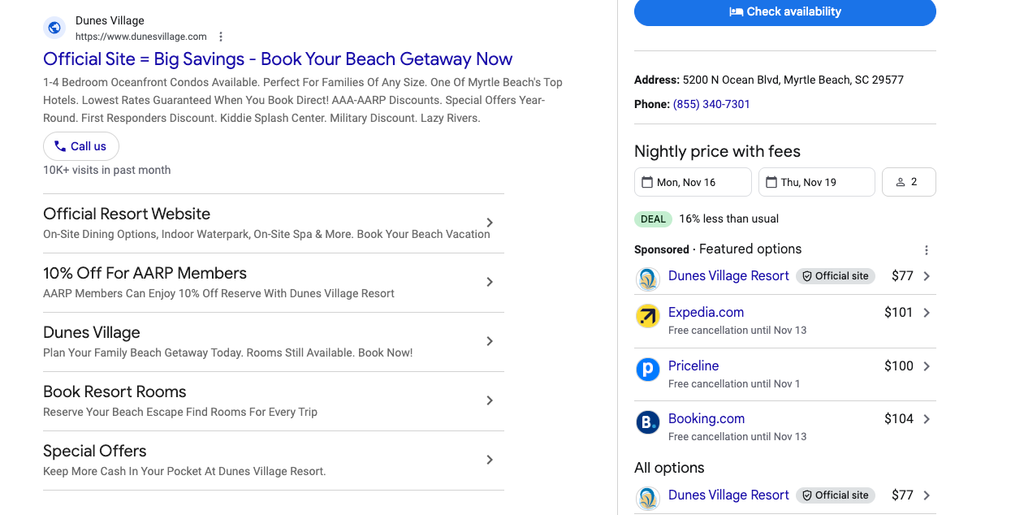
If someone searches your hotel name, they might see your brand search ad, Hotel Ad, and a free booking link. The traveler only needs to click on one ad to book, but they might click on multiple ads as they browse, increasing your cost-per-acquisition.
All Channels Claim the Revenue
Each platform measures its own results using its own attribution rules. Google Ads, Hotel Ads, and the metasearch platforms will each report the booking as its own. This means that the combined revenue for all ad platforms could be significantly higher than what your booking engine (your source of truth) reports.
Attribution conflicts could signal that channels lack defined roles within your marketing strategy or are subject to poor management.
Understand the Goal of Each Channel
Each channel should have a primary strategy, and your budget should reflect that strategy. We generally recommend you “fill the funnel.” This means putting most of the budget towards the bottom of the booking funnel (brand search ads). Once that portion of the funnel is “saturated,” excess budget is moved up the funnel (non-brand, Hotel Ads, metasearch) to help target additional travelers.
If your funnel is not “filled,” it could become saturated higher up the funnel. This means you could be paying to generate discovery and awareness through non-brand or Hotel Ads, only to have competitors or OTAs capture the booking. You might either lose the reservation completely or increase your cost-per-acquisition through OTA commissions.
Paid Search Brand Campaigns: Play Defense
Brand campaigns are important because they ensure that your hotel appears first when a user searches for your property by name.
Paid Search Non-Brand Campaigns: Capture New Demand
Non-brand campaigns intentionally target users searching for hotel attributes that match an experience or amenities your hotel offers or searching a geographic area (such as “hotel near Madison Square Garden”). These travelers may not have a hotel in mind and are most interested in finding a property with specific amenities, location, or features.
Hotel Ads: Ensure Price Comparisons
Hotel Ads display your hotel alongside other similar hotels. The goal is to make sure travelers can see and compare your direct rate when evaluating booking options for your hotel.
Metasearch: Increase Awareness in Comparison Shopping
Metasearch ads allow your hotel to appear alongside OTAs on sites where users are researching and comparing hotel options and rates. Metasearch is especially valuable in markets and segments where OTAs are prominent, giving travelers a way to compare your (hopefully lower) direct booking rate against third parties.
Why Brand Bidding is Vital
You might question the importance of bidding on your own brand—wouldn’t users find your website if they are searching for it? There are several reasons that assumption could lower revenue for your hotel. Here are some benefits of brand bidding:
- Defend Against the OTAs – Competitors and OTAs bid aggressively on hotel brand names to capture bottom-of-funnel traffic and steal users who know your brand and are looking to book. Failing to run brand search ads can let a competitor or OTA steal that booking.
- More Control of Search Engine Results Page – Because your website is the result that most users expect when they search your property by name, these ads are efficient to run and earn the highest quality score within Google. You secure the first spot in Search and also push paid and organic competitors down the page. When your brand ad, ad extensions, My Business Listing (which you should also have), and organic results all show, you control a larger portion of the results page and have better visibility.
- Retain Guest Information – When someone books directly through your website, you obtain guest information that you wouldn’t get when they book through an OTA. Data, like the guest’s contact information and email, allows you to market to them to better control their stay experience and build loyalty.
- Improved Organic Performance – This benefit is harder to measure, but research suggests that running paid search ads can increase overall search visibility and drive organic performance.
When your branded ads and Hotel Ads work together, rather than competing, you can maximize the benefits of both channels.
Pay-per-Click or Commission Model?
Metasearch offers two different cost models: Pay-per-Click and Commission. Which one is best for your hotel? To find out, compare your cost per acquisition to what you would pay an OTA in commission for the same booking. If a channel delivers a direct booking at a lower cost than an OTA, that’s a winning strategy. If it costs about the same or more, it deserves a closer look.
Many hotels will use a mix. PPC gives you control when your conversion rate is strong, while commission-based pricing offers a lower-risk way to test a new channel or market.
Pay-Per-Click Ads: Benefits and Risks
You pay each time a user clicks on one of your ads, whether or not they book. Platforms generally let you manage your budget and bids, and influence First Position Share (the percentage of times your listing appears in the top position). This lets you control how much you want to spend and how competitive you want to be. The risk is that you may pay for clicks that do not convert into bookings, so it is very important that your rates are in parity with competitors on the platform.
Commission-Based Ads: Benefits and Risks
Under a commission structure, you pay a percentage of the booking but only when a user books through the platform. This strategy shifts some of the risks of abandoned clicks, but the trade-off is that commission rates can be higher than what you would pay for the PPC model, depending on your conversion rate.
Rely On Your Source of Truth
Each platform has its own attribution model and way to measure revenue. If you are only relying on Google Ads, Hotel Ads, or metasearch platforms for measurement, you could be overcounting your revenue. Evaluate each platform against a source of truth: your booking engine. If the platforms attribute more combined revenue than the booking engine, you know that there is overlap. When you recognize this, judge channels on actual booking engine results instead of skewed platform reports.
How to Avoid Double Paying
Negative Keywords
Brand campaigns should target searches for your hotel’s name and non-brand should not. Complete keyword research regularly and use negative keywords to prevent overlap between campaigns. This will help ensure that the keyword intent matches the goal for each campaign and provides more accurate data to measure each channel’s performance.
Hotel Ad Bids
Depending on the platform, Hotel Ads may allow you to change bids based on device type, user location, and other targeting details. Deeply evaluate and optimize these campaigns so you aren’t overlapping with audiences already being reached and campaigns already performing well.
Rate Parity
This refers to whether or not your rates are competitive with rates offered elsewhere. When all else is equal, guests will generally book through the platform with the lowest rate. Even if a competitor’s rate is just 5% or 10% lower than yours, it could give someone booking multiple nights a significant savings incentive to book elsewhere.
Seasonality
Most hotels have strong seasonality and experience fluctuations in room demand at different times of the year. When demand is high, travelers book fast. This increases competition and makes it even more important to protect your brand and Hotel Ad visibility against competitors and OTAs. When demand is low, non-brand and metasearch can help build awareness for the hotel with fewer competitive risks.
Audit Checklist
- Compare platform bookings with your booking engine. This should be the first step in evaluating how much overlap you might have between the different platforms.
- Run a competition analysis. Utilize your Auction Insights report in Google Ads to see what competitors are bidding on your brand; regularly search for your hotel in Hotel Ads and metasearch platforms to evaluate competitors and rate parity. Work with your booking engine provider and OTA partners to limit how much OTAs can underbid your hotel’s direct rates.
- Reallocate the budget. Consider seasonality, competition, room availability, and revenue overlap to ensure that the proper channels and platforms have sufficient budget to drive revenue at a healthy return and a low cost-per-acquisition.
Conclusion
Paid search, Hotel Ads, and metasearch all have a place in a direct booking strategy. The trouble starts when ads run without direction, chase the same traveler, and bill you twice. Give each channel a clear job. Defend your brand. Track everything against your booking engine. Choose cost models that fit your margins, and keep your rates competitive so the direct link wins. With those strategies, your marketing can start bringing in more bookings at a lower cost.
If you’d like to learn more about how your hotel can reduce overlap on advertising platforms and drive more bottom-line revenue, contact Eight Oh Two for an evaluation today.